Candidate Ranking Software: How AI Surfaces the Right Applicants
Picture this: 120 applications land in your inbox for a single role. All of them have roughly relevant CVs. All of them wrote a cover letter. And you have two hours to put together a longlist.
This is the moment where most recruiters stop working systematically – and start trusting their gut.
The problem with that: gut feel doesn't scale. It gets fatigued, it drifts, and it ends up costing you the candidates you actually wanted.
Candidate ranking software solves exactly this.
What ranking software actually does
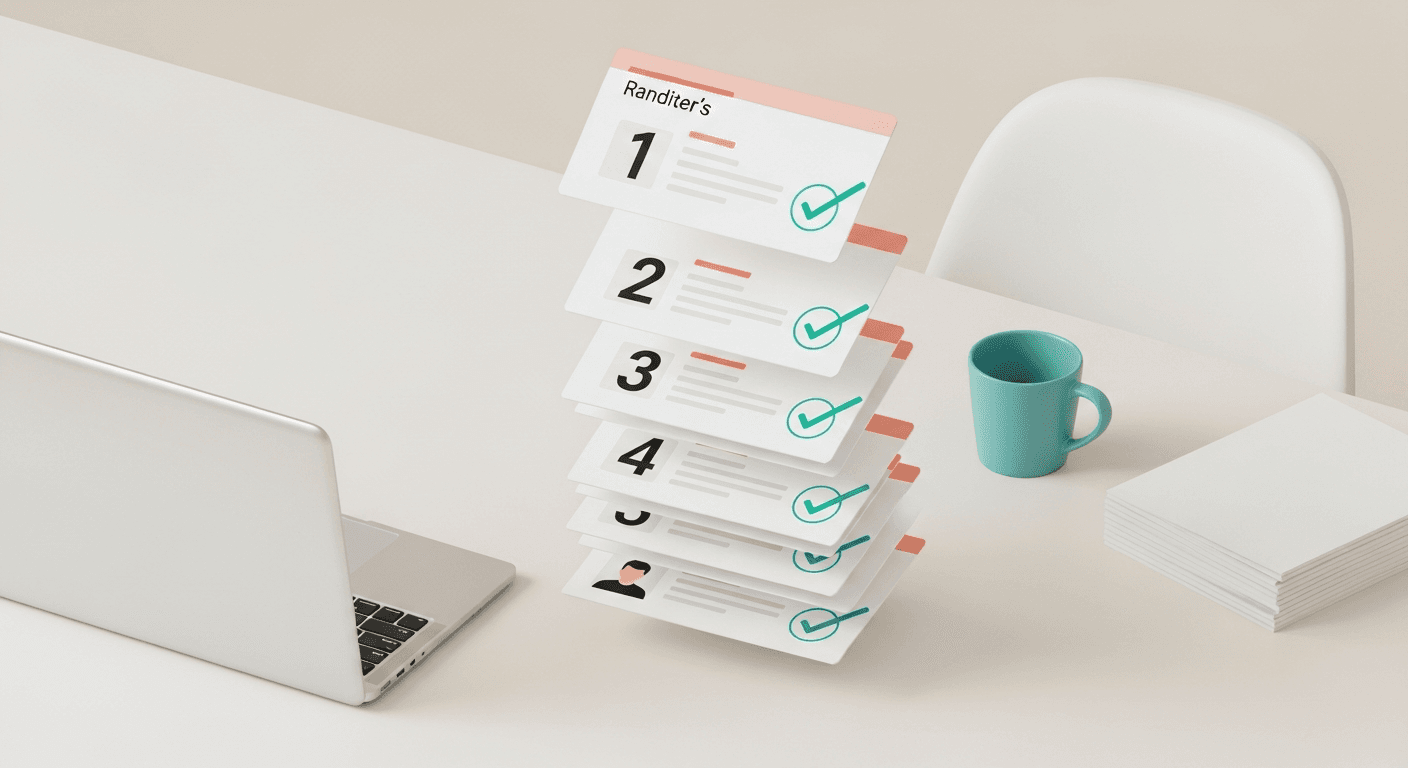
At its core, the idea is simple: applications are automatically compared against a requirements profile and ordered by relevance. Not by arrival time or random chance – by fit.
Modern systems go far beyond keyword matching. AI-powered ranking software analyzes:
- Work experience – not just job titles, but responsibilities, scope, and industry context
- Education and qualifications – including equivalencies across different naming conventions
- Technical skills – even when labeled differently (JavaScript vs. JS, AWS vs. Amazon Cloud)
- Career trajectory – does the candidate's path actually make sense for this role?
- Soft skills – readable from phrasing, leadership indicators, and project ownership signals
The result: instead of 120 equally undifferentiated profiles, you get a prioritized list – with the best matches at the top.
The difference between ranking and filtering
Traditional applicant tracking systems (ATS) can filter. But filtering isn't ranking.
An ATS filter says: "Show me all applications that mention 'project management'." A ranking system says: "Here are the 10 best matches for your PM role – with a score and reasoning."
That sounds like a small difference. In practice, it's enormous. Filters produce lists you still have to sort manually. Rankings produce decision-ready outputs.
There's another issue with classic ATS filters: they punish. A candidate who doesn't use your exact terminology gets dropped – even if they'd be your best hire. AI-based ranking understands context and semantics. Someone who writes "leading engineering teams" will match even if you searched for "software team lead."
What a good scoring system looks like
Not all ranking software is equally transparent. The most important thing to look for: explainability.
A score of "87/100" doesn't help you much if you don't know why. Good systems break it down: which criteria carry how much weight? Where does a candidate score well, and where are the gaps?
HireSift, for example, shows which job requirements each candidate meets or misses – including the specific CV passages that support each finding. No black-box score; a result you can actually defend.
This matters for legal reasons too. The EU AI Act and anti-discrimination regulations require that automated HR decisions be explainable and free from bias. Transparency isn't just good practice – it's increasingly a compliance requirement.
A practical workflow for using ranking effectively
1. Sharpen your requirements profile Ranking quality depends entirely on input quality. Before you run the software, define your must-haves (knockout criteria) and nice-to-haves. The more precise your profile, the more accurate your ranking.
2. Load all applications – without pre-filtering Many recruiters make the mistake of manually sorting before the ranking runs. Don't. Let the software handle the first pass. You'll be surprised by the candidates who would have otherwise slipped through.
3. Review top candidates qualitatively The ranking gives you your longlist. You still build the shortlist yourself – but with far less effort, because you're only closely reviewing the top 15–20%.
4. Use the score as a discussion tool When you explain to a hiring manager why someone made the shortlist, you can point to the score and the reasoning behind it. That makes recruiting decisions defensible – internally and externally.
What ranking software can't do
Let's be honest: no algorithm can assess motivation. Whether someone will actually thrive on the team, whether they have the drive the role requires – that only becomes clear in conversation, not from a CV.
Ranking software is a selection tool, not a hiring tool. It helps you get to the right conversations faster. What happens in those conversations is still on you.
That's a good thing.
Conclusion: Make ranking your default, not your exception
If you're still ranking manually – by arrival time, by first impression, by gut feel – you're losing time every day and probably losing candidates too.
Candidate ranking software isn't a luxury anymore. It's what your recruiting process needs to handle the volume that modern job postings generate.
Start with a sharp job profile. Let AI take the first round. Put your time into the conversations that actually matter.
HireSift offers AI-powered candidate ranking directly in your browser – no ATS, no setup required. Request a demo →
Candidate data stored in the EU. AI processing on EU infrastructure.
CVs and profiles are stored permanently in Frankfurt. AI analysis runs in Paris or Belgium — encrypted, transparent, and without model training.
Request demoRelated Articles

AI recruiting without bias: how to screen fairly and transparently
AI can support fairer hiring when criteria, data quality and human review are designed with care.

AI Interview Questions: How to Make Hiring Conversations More Structured and Fair
AI can turn role criteria and CV signals into better interview questions. Learn how to use it without losing human judgement.

How to Identify Soft Skills in Applications Without Guesswork
Soft skills matter, but they are easy to misread. Learn how to assess signals in CVs and applications fairly and consistently.